
It is one of the most difficult experiences a pet owner can face: you know your beloved dog or cat is sick, but the answer to why remains just out of reach. When symptoms are complex, chronic, or unusual, your family veterinarian may refer you to a specialist. This is where Veterinary Internal Medicine steps in.
What is a Veterinary Internal Medicine Specialist?
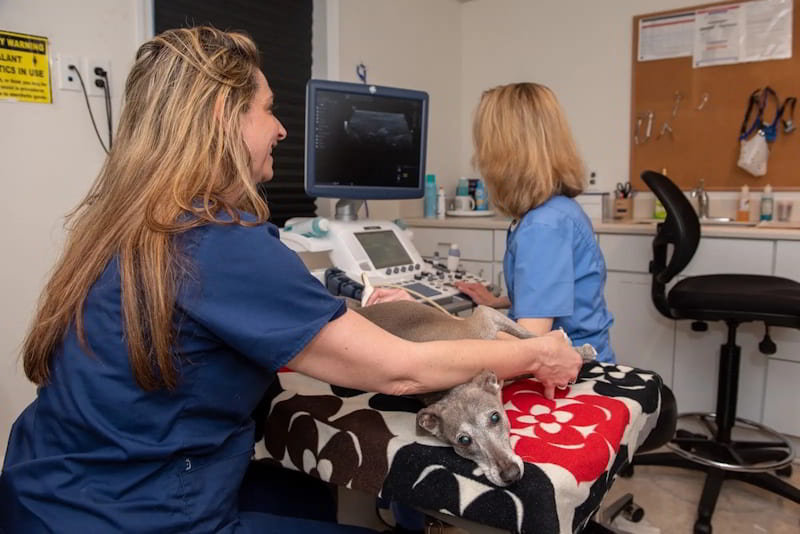
Think of a Veterinary Internist as a “problem solver” or a “medical detective” for pets. A specialist in Veterinary Internal Medicine is a veterinarian who has completed extensive, advanced training (including a multi-year residency) specifically focused on diagnosing and treating complex, chronic, and hard-to-diagnose diseases. They are experts at seeing the “big picture.” They specialize in understanding the intricate ways your pet’s internal body systems—like the endocrine, gastrointestinal, and urinary systems—work together, and more importantly, what happens when they don’t.
When Might My Pet Need a Veterinary Internist?
Your primary veterinarian provides outstanding care, but they may recommend a consultation with an internist when a case requires highly specialized diagnostics, 24/7 monitoring, or a “second opinion” for a challenging illness. We partner with your family veterinarian to provide the next level of care. You might need a veterinary internal medicine specialist if your pet is experiencing:
Vague or Complex Symptoms
Such as unexplained weight loss, chronic vomiting or diarrhea, persistent fever, or extreme lethargy that hasn’t responded to initial treatments.
Chronic Conditions
Management of long-term diseases like diabetes, Cushing’s disease, Addison’s disease, or complex kidney or liver disease.
Multiple Health Problems
Especially common in senior pets, where conditions like hyperthyroidism and kidney disease may complicate one another.
Infections and Immune Diseases
Diagnosing and treating complex infectious diseases (fungal, bacterial) or immune-mediated conditions (like IBD or IMHA) where the body attacks its own cells.
Endocrine (Hormonal) Issues
Regulating challenging hormonal conditions like hypothyroidism, or hyperthyroidism, diabetes, parathyroid disorders or Addison’s disease.
Gastrointestinal, Respiratory, or Urinary Issues
Cases requiring advanced diagnostic procedures, such as endoscopy.
Blood Cell or Bone Marrow Disorders
Cases that may require bone marrow aspiration to diagnosis and/or ongoing follow-up to monitor blood cell counts.
Chronic Appetite Problems Secondary to Chronic Illness
Cases where a pet may require a temporary feeding tube placed.
Our Approach to Compassionate Diagnosis & Care
Our internal medicine team works in close partnership with you and your family veterinarian. We know that this process can be stressful, and our primary goal is to provide answers with compassion and clarity. An internal medicine consultation involves:
We begin with a comprehensive, sixty to ninety-minute appointment to review your pet’s entire medical history, analyze previous tests, and perform a thorough physical examination. This detailed history is one of the most important tools we have.
We examine your pet’s entire body from nose to tail including palpating lymph nodes, palpating the abdomen, and performing auscultation of the lungs and heart to get a sense of your pet’s whole body health.
Because our internists specialize in complex cases, they utilize advanced diagnostic tools to find answers that may not be possible in a general practice setting. This includes procedures like endoscopy (using a small camera to look inside the GI tract or nasal cavity), ultrasound, ultrasound-guided biopsies, fine needle aspirates, extended infectious disease testing, specialized hormonal testing, and bone marrow aspirates.
Getting a test result is only half the battle. Our specialists use their advanced training to interpret these results in the context of your pet's whole-body health, allowing them to form a complete picture.
We make decisions with you, not for you. Once we have a diagnosis, we will discuss all available treatment options, the prognosis, and the quality of life for your pet.
Our Veterinary Internal Medicine Specialists
The heart of our internal medicine service is our team of dedicated, highly-trained specialists. Their combined expertise and compassionate approach ensure your pet receives the highest standard of care.
Jennifer Adler
MSc, VMD, DACVIM (SAIM)
MVA

Kristin Heft
DVM, DACVIM
MVA

Tabitha A. Hutton
DVM, MTR, DACVIM (SAIM)
MVA

Leslie A. Kuczynski
VMD, DACVIM - Medical Director
MVA
If you are concerned about your pet’s health, please talk to your primary veterinarian about a referral to one of our specialty internal medicine departments at either Metropolitan Veterinary Associates or Hickory Veterinary and Specialty Hospital.